

Wired Fitness San Diego Hero Image Outdoor group strength training with Wired Fitness San Diego

Why team sports fail autistic kids is one of the most common frustrations parents quietly carry—and one of the most misunderstood issues in youth sports.

Parents are often told:

🔹“They just need to push through it.”

🔹“Sports build character.”

🔹“They’ll adapt eventually.”

That advice sounds confident.
It’s also wrong for a large percentage of autistic kids.

Team sports don’t fail autistic kids because they’re weak, lazy, or unmotivated.
Team sports fail autistic kids because the environment overwhelms them before learning can even begin.

Why team sports fail autistic kids: too many demands at once

To understand why team sports fail autistic kids, you have to stop focusing on effort and start looking at load.

Team sports stack multiple demands simultaneously:

  ✅ Physical exertion
  ✅ Rapid decision-making
  ✅ Unpredictable movement
  ✅ Loud, chaotic environments
  ✅ Constant peer awareness
  ✅ Authority shifts (coaches, referees)
  ✅ Public mistakes

Any one of these can be manageable
All of them together is where things break

When regulation capacity is exceeded, what looks like:

  🔹Quitting

  🔹Meltdowns

  🔹Refusal

…is not a behavior problem.
It’s overload.

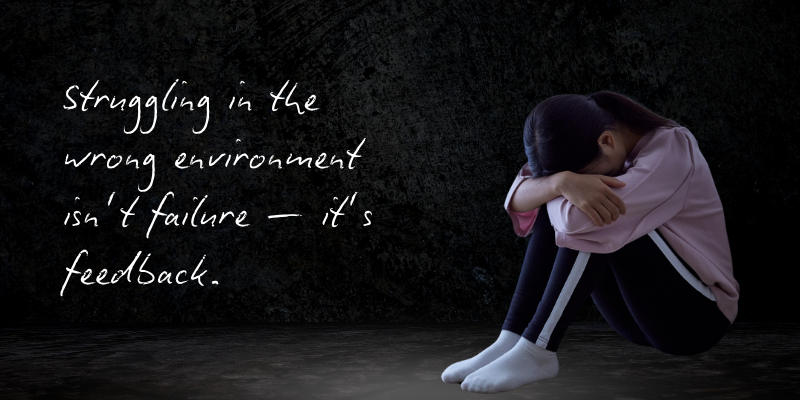
Why team sports fail autistic kids when the environment creates sensory overload and emotional withdrawal

Why team sports fail autistic kids even with “more practice”

One of the most damaging myths parents hear is:

“The more they do it, the easier it gets.”

That can be true for neurotypical kids.
For many autistic kids, it does the opposite.

Repeated overload teaches:

  🔹“I always mess up.”

  🔹“Everyone is watching me.”

  🔹“I don’t belong here.”

That’s not resilience.
That’s learned anxiety.

Research has shown that increased social and environmental unpredictability is associated with higher anxiety and withdrawal in autistic youth.

    → Anxiety in Children and Adolescents with Autism Spectrum Disorders. Journal of Autism and Developmental Disorders

Studies indicate that competitive group sports environments can elevate stress responses in children with autism due to sensory and social overload.

    → The effect of physical activity interventions on youth with autism spectrum disorder: A meta-analysis. Research in Autism Spectrum Disorders

Evidence suggests that structured, individualized physical activity improves emotional regulation more effectively than unstructured group play for autistic children.

    → Effects of Physical Activity on the Health and Behavior of Children with Autism Spectrum Disorder. Autism Research

Why team sports feel chaotic instead of motivating

Another core reason why team sports fail autistic kids is the constant requirement to interpret and adjust.

Autistic kids are continuously trying to answer:

  🔹 Where should I be right now?
  🔹 Who am I supposed to listen to?
  🔹 Did the rules just change?
  🔹 Was that my mistake?
  🔹 Is everyone watching me?

All while:

  🔹 Noise levels are high
  🔹 Instructions change rapidly
  🔹 Feedback is public

That is not “learning teamwork.”
That is cognitive overload under pressure.

Parent note:
When a child melts down or shuts down in sports, it is rarely about effort or attitude. In most cases, the environment is asking for regulation skills the child has not built yet.

Parents often feel guilt when sports don’t work.
Understanding why team sports fail autistic kids removes that guilt.

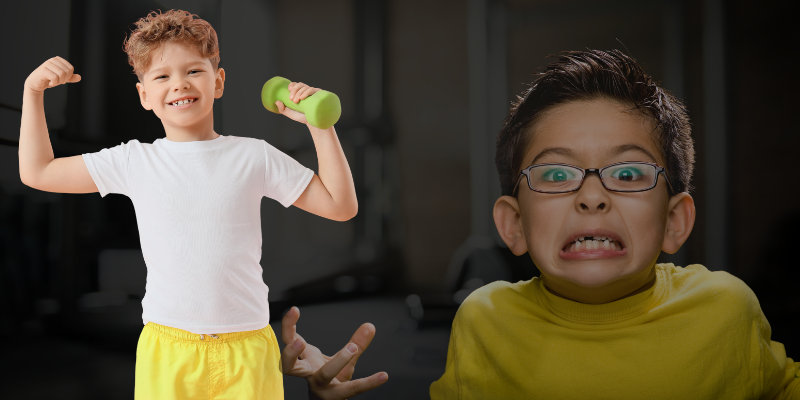
Autistic child showing strength and confidence in a supportive fitness environment compared to overwhelm in an overstimulating setting

Why alternatives to team sports actually work

Instead of asking:

“How do we force sports to work?”

The better question is:

“What environment allows my child to succeed first?”

Autistic kids thrive in environments that are:

  ✅ Predictable
  ✅ Calm
  ✅ Low-pressure
  ✅ Physically structured
  ✅ Focused on individual success

Families looking for a calmer, structured option can explore youth programs designed specifically for neurodiverse kids at Wired Fitness San Diego.

Structured fitness succeeds where team sports fail

When you look at why team sports fail autistic kids, the contrast becomes obvious.

Structured alternatives remove unnecessary stressors while keeping challenge.

They allow:
  🔹 Effort without chaos
  🔹 Mistakes without embarrassment
  🔹 Instruction without overload
  🔹 Confidence without comparison  

This isn’t avoiding difficulty.
It’s building capacity in the right order.

Child building confidence and physical strength in a calm, structured youth training environment

Team sports vs structured alternatives

Factor Team Sports Structured Alternatives
Environment Loud, unpredictable Calm, controlled
Social Pressure Constant Optional
Feedback Public and emotional Private and neutral
Success Rate Low for many autistic kids High with proper structure

Why team sports fail autistic kids before confidence exists

Confidence must come before complexity.

When autistic kids build:

  🔹Physical confidence

  🔹Emotional regulation

  🔹Tolerance for instruction

…some later return to sports successfully.

Skipping this step is one of the biggest reasons why team sports fail autistic kids early.

Team Sports Not Working for Your Child?

Our structured youth fitness programs help neurodiverse kids build confidence, regulation, and strength—without chaos, pressure, or forced socialization.

Why Team Sports Fail Autistic Kids: FAQs

why team sports fail autistic kids, autism team sports challenges, autism sports anxiety, alternatives to team sports autism, neurodiverse youth fitness

Because effort is not the limiter—capacity is. Team sports stack sensory noise, fast transitions, public mistakes, and social judgment at the same time. When the environment exceeds regulation capacity, learning shuts down and overload shows up as meltdowns, quitting, or refusal.
Yes. Many autistic kids leave team sports because the environment is overwhelming—not because they lack ability. Quitting is often a protective response to repeated overload.
Not if you replace it with a healthier environment. Social skills build better when a child is regulated and confident. A calmer setting (one-on-one or small group) can develop tolerance, communication, and cooperation without overwhelming pressure.
No. Some autistic kids enjoy and succeed in team sports—especially when the coach is structured, the environment is calmer, and regulation skills are already strong. The goal is the right fit, not forcing the norm.
One-on-one training, small-group fitness (2–3 kids max), individual skill-based sports lessons, swimming, martial arts with structure, hiking, and strength-based programs. The best option is predictable, measurable, and low social pressure.
Look for patterns: worsening during loud practices, chaotic drills, new coaches, crowded fields, or after public corrections. If the same child does well in calm, predictable environments but falls apart in chaotic ones, it’s overload—not character.
Yes. Many do better later after they build confidence, instruction tolerance, and regulation capacity through structured training. Think “capacity first, complexity later.”
No. Social interaction should be optional. The right programs focus on regulation, confidence, and task completion first—then gradually expand tolerance for peers as the child is ready.
Many families notice better transitions, fewer blow-ups, and improved confidence within a few weeks—especially when the routine is consistent and the coach keeps demands predictable.
Yes. Wired Fitness San Diego offers one-on-one and small-group youth fitness programs designed for neurodiverse kids with a calm, structured, regulation-first approach.