

Emotional regulation challenges are one of the most common struggles autistic and neurodiverse children face every day. Parents routinely describe moments where sensory overload, quick transitions, or unexpected changes lead to emotional shutdowns or escalation. This is exactly why exercise for emotional regulation in autism has become such a powerful, research-supported strategy. Structured, predictable movement helps autistic youth stabilize their nervous systems, develop motor control, and build confidence — while also improving emotional flexibility and resilience.
Wired Fitness SD has spent more than two decades designing safe, adaptive strength-training programs that align with how autistic kids learn, move, and regulate. Our approach blends biomechanics, sensory-aware coaching, and steady progression to help kids experience calm, successful movement patterns that reinforce emotional stability.
Autistic kids often thrive when expectations are clear and progress is measurable. Our structured fitness programs for autistic kids prioritize regulation, confidence, and skill development.
View the full neurodiverse youth program →Growing evidence shows that exercise for emotional regulation in autism creates measurable benefits in attention, mood, and stress recovery. Structured strength work provides the repetition and predictability autistic youth often rely on to feel secure and grounded.
✅ Exercise stabilizes the autonomic nervous system
Autistic kids often spend more time in “fight-or-flight” mode. Structured movement shifts the body toward calm, predictable patterns that support emotional stability.
✅ Strength-based exercise provides deep-pressure sensory input
This grounding sensation helps autistic kids feel calmer, safer, and more in control of their emotions.
✅ Exercise builds resilience to stress
The nervous system becomes more efficient at recovering after overwhelm.
✅ Movement improves mood-regulating neurotransmitters
Dopamine, serotonin, and endorphins—often imbalanced in autism—improve with consistent training.
✅Exercise strengthens executive functioning
Better working memory, organization, and flexibility = better regulation.
🔹 Research Insight
According to research published in Frontiers in Psychology, structured physical activity can significantly improve emotional regulation, social behavior, and adaptive functioning in children with autism.
Another study in Neuroscience & Biobehavioral Reviews reported that proprioceptive-heavy exercise improved self-regulation and sensory modulation.
These findings match what coaches and parents see daily: exercise for emotional regulation in autism works because it directly trains the systems that regulate emotions.
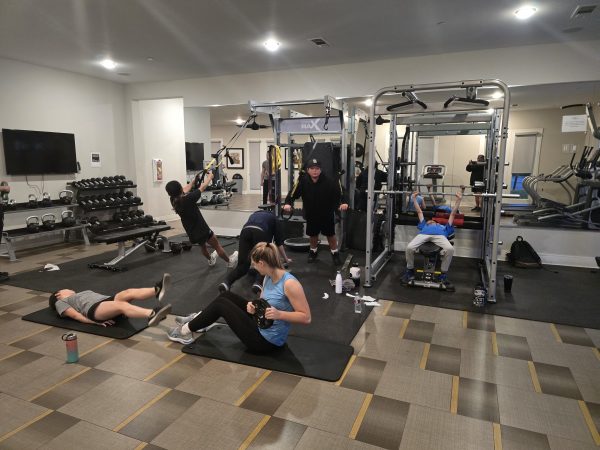
Understanding why exercise helps requires understanding how autistic brains work.
Many autistic kids experience:
🔹 sensory overload
🔹 difficulty switching tasks
🔹 slower emotional recovery
🔹 heightened stress response
🔹 inconsistent body awareness
🔹 difficulty inhibiting emotional output
✅ Strength training strengthens the prefrontal cortex
This is the brain area that helps kids think before reacting, handle frustration, and tolerate transitions.
✅ It retrains the stress-response system
Controlled physical effort teaches the body how to activate and then return to calm—crucial for emotional regulation in autism.
✅ It increases “feel-good” neurotransmitters naturally
Improving mood, motivation, and flexibility.
✅ It helps the brain build new regulation pathways
Regular movement strengthens emotional resilience and makes meltdowns less frequent or intense.
🔹 Improved interoception (awareness of internal states)
🔹 Better proprioception (awareness of the body in space)
🔹 Enhanced decision-making
🔹 Higher frustration tolerance
Autistic kids don’t just “get stronger”—they become better at navigating the world.

Many autistic kids don’t “hate fitness”—they hate chaotic environments. Sensory-friendly strength training reduces noise, crowding, speed pressure, and public correction.
Read: Sensory-friendly strength training →Strength-based exercise for emotional regulation in autism improves neuromuscular coordination, reduces sensory overwhelm, and increases a child’s ability to process transitions without emotional shutdown.
✅ Deep-pressure proprioceptive input grounds the nervous system
This is why carrying, pushing, pulling, and lifting feel calming to many autistic kids.
✅Rhythmic, repeated movements reduce anxiety
Predictability lowers the threat response and increases emotional stability.
✅ Controlled vestibular input supports balance and calm
Unlike chaotic movement, structured strength work feels safe and steady.
✅ Strength movements improve sensory confidence
Kids who feel more connected to their bodies feel more emotionally stable. Structured movement gives autistic children a reliable way to reset — the foundation of exercise for emotional regulation in autism.
🔹 Improved tolerance to transitions
🔹 Less sensory defensiveness
🔹 Better coordination
🔹 More self-awareness
This is why strength training is often more effective for regulation than general play or PE.
Team sports are valuable—but for many autistic kids, they are overwhelming. Strength training solves the common barriers.
✅ Predictability
Repetition and structured flow reduce anxiety and create safety.
✅ Controlled sensory environment
No whistles, yelling, fast visual movement, or chaotic unpredictability.
✅ One-on-one or small group instruction
Kids receive personalized pacing and sensory support.
✅ Immediate, measurable success
Success builds confidence → confidence increases emotional regulation capacity.
🔹 Reduced comparison to peers
🔹 Less pressure to socialize
🔹 Ability to pause when dysregulated
🔹 Individualized communication
Strength training gives autistic kids the exact structure they need.
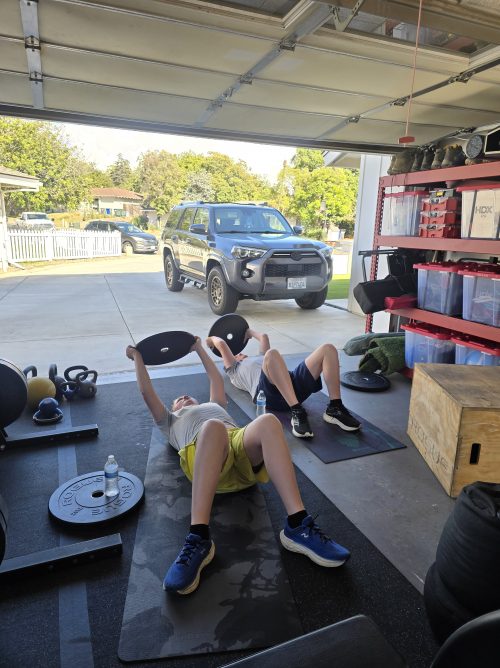
Years of coaching neurodiverse youth shaped an approach that truly works.
✅ Regulation-first programming
Emotional state determines pacing, intensity, and exercise selection.
✅ Sensory-aware movement progressions
Exercises are chosen based on sensory needs, not just fitness goals.
✅ Predictable training structure
Every session follows a similar rhythm—vital for autistic nervous systems.
✅ Visual demonstrations and minimal verbal overload
Autistic kids often learn best by watching, not verbal explanation.
✅ Flexible transitions
If the child is dysregulated, training shifts immediately.
✅ Emotional safety and zero pressure
Kids perform better when they feel safe and understood.
🔹 Decades of biomechanics expertise
🔹 Neurodiverse communication strategies
🔹 Strength-first approach that builds confidence
🔹 Ability to train in-home, in-gym, or outdoors
This is why WFSD programs consistently outperform traditional fitness or school PE for autistic youth.
Strength training does not replace clinical therapies—instead, it magnifies their results.
✅ OT + Exercise
OT builds sensory tolerance; strength training reinforces sensory organization.
✅ PT + Exercise
PT corrects patterns; strength training strengthens them.
✅ ABA + Exercise
ABA changes behavior; exercise increases emotional capacity, making behavior easier to manage.
This is why exercise for emotional regulation in autism is becoming one of the most recommended non-medical interventions for autistic youth.
🔹 Deep proprioceptive load
🔹 Confidence-building
🔹 Nervous-system conditioning
🔹 Physical autonomy
This complementary relationship is a huge reason parents see rapid changes.
Parents consistently report that exercise for emotional regulation in autism translates into fewer daily meltdowns, smoother morning routines, and better tolerance for change.
✅ Weeks 2–4: Early Regulation Shifts
Kids become calmer, sleep improves, and transitions are less chaotic.
✅ Weeks 6–8: Behavior Improvements
Meltdowns decrease, flexibility increases, emotional recovery speeds up.
✅ Weeks 10–12: Confidence & Resilience
Kids show more independence, confidence, and emotional stability.
🔹 Better school days
🔹 Improved relationships with siblings
🔹 Less anxiety around routine changes
🔹 More willingness to try new tasks
These changes are consistent, repeatable, and well-documented. Families often discover that once exercise for emotional regulation in autism becomes routine, emotional stability improves across the entire day.
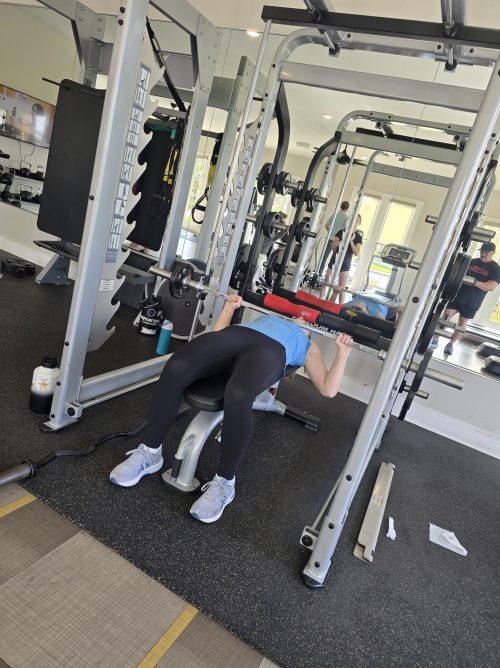
Use this checklist to help determine whether exercise for emotional regulation in autism will produce noticeable results for your child.
✅ Your child seeks or benefits from deep-pressure input
Kids who enjoy pushing, pulling, lifting, or climbing usually respond exceptionally well to strength-based exercise.
✅ Transitions are a challenge
If mornings, school drop-offs, bedtime, or task changes are difficult, structured exercise builds the neurological pathways that support smoother transitions.
✅ Emotional reactions escalate quickly
Exercise helps shorten the “stress-to-calm” pathway.
✅ Sensory overload or shutdown happens frequently
Strength training reduces overwhelm by organizing sensory input.
✅ Instructions need to be visual
Autistic kids who learn through demonstration respond extremely well to strength programs.
✅ Team sports feel overwhelming or unpredictable
Strength training removes sensory chaos and builds confidence in a controlled environment.
🔹 Your child avoids group PE
🔹 They’re hesitant with new tasks
🔹 They get easily frustrated
🔹 They crave routine and predictability
If several points apply, your child is an excellent candidate for structured exercise-focused regulation training.
“Strength training has changed everything for us. His frustration tolerance is higher, meltdowns are shorter, and mornings aren’t battles anymore.”
— A.M., San Diego
“She never liked team sports, but she absolutely loves this. The structure and predictable pace help her feel safe. Her confidence has skyrocketed.”
— J.R., Carmel Valley
“If he gets overwhelmed, he returns to calm much faster now. The improvements in emotional regulation have been incredible.”
— T.S., University Heights
“He understands her cues, pacing needs, sensory profile, and when to push or pause. She feels supported every step of the way.”
— K.G., Pacific Beach
✅ Exercise trains the nervous system—not just the muscles. It strengthens the pathways responsible for calm, stress recovery, and emotional control.
✅ Strength training is the most effective form of exercise for autistic kids. Predictability, repetition, and deep-pressure input create a highly regulating environment.
✅ Regulation improvements begin within weeks. Parents often see better mornings, fewer meltdowns, smoother transitions, and more confidence.
✅ Sensory and neurological benefits accumulate over time. Consistency leads to long-lasting emotional stability and improved self-awareness.
✅ WFSD provides a uniquely effective coaching model. Sensory-aware programming, biomechanics expertise, visual teaching, and regulation-first pacing make training accessible for all neurodiverse kids.
Our neurodiverse youth strength training programs are designed to improve emotional regulation in autism through structured, sensory-aware exercise that feels safe, predictable, and empowering.
When the right environment and coaching are in place, exercise for emotional regulation in autism becomes more than physical movement — it becomes a pathway to confidence, calm, and improved daily functioning. With structured strength training, neurodiverse kids learn how to regulate through movement, adapt to transitions, and build emotional resilience that carries into home, school, and social settings.
If your child struggles with emotional control, sensory overload, or confidence during movement, the right exercise program can create meaningful change. Our approach is built on decades of experience helping autistic youth find success through predictable, supportive, strength-focused training.
Your child deserves to feel capable — and movement is a powerful place to start.
Yes. Structured exercise influences sensory processing, the autonomic nervous system, and emotional recovery pathways. It builds neurological capacity for calm, flexibility, and resilience.
OT targets functional and sensory goals, while strength training provides large-scale proprioceptive input and predictable structure that reinforce emotional regulation at a deeper level. They work extremely well together.
This is common. Training begins with predictable routines, visual demonstrations, and sensory-safe progressions to help your child feel grounded and comfortable from day one.
Families often notice changes in 2–4 weeks, with major improvements in 8–12 weeks. Emotional recovery time, flexibility, and frustration tolerance typically increase first.
Yes. Strength training is not competitive, overstimulating, or unpredictable. It offers a calming, individualized experience perfect for kids who struggle in group sports.
Theme: Illdy. © Copyright 2016. All Rights Reserved.