

Strength training for motor planning in autism focuses on helping autistic kids improve how they plan, sequence, and execute movement in a calm, structured environment. For many children on the spectrum, motor planning challenges make physical activity frustrating—not because they lack strength or motivation, but because movement feels unpredictable and hard to organize.
At Wired Fitness San Diego, strength training for motor planning in autism is delivered using Structured Therapeutic Style (STS) principles. Movements are slowed down, broken into clear steps, and repeated consistently so kids can build coordination, confidence, and regulation without sensory overload. Social recreation is introduced thoughtfully and only when readiness allows.
Structured strength and movement programs designed for autistic and neurodivergent kids and teens who benefit from predictability, calm coaching, and small-group environments.
Motor planning is the brain’s ability to:
🔹 Organize movement sequences
🔹 Time actions appropriately
🔹 Adjust force and direction
🔹 Execute tasks smoothly
When motor planning is challenging, kids may appear clumsy, hesitant, or resistant to physical activity—even when they want to participate. These challenges often show up in sports, playground activities, and daily movement tasks.
Traditional sports demand fast reactions, unpredictable movement, and constant social interaction. For kids with motor planning challenges, this often increases anxiety instead of skill development.
Strength training for motor planning in autism works because it:
✅ Slows movement down intentionally
✅ Trains one skill at a time
✅ Uses predictable, repeatable patterns
✅ Provides clear physical feedback
This structure allows the nervous system to learn efficiently without overwhelm.
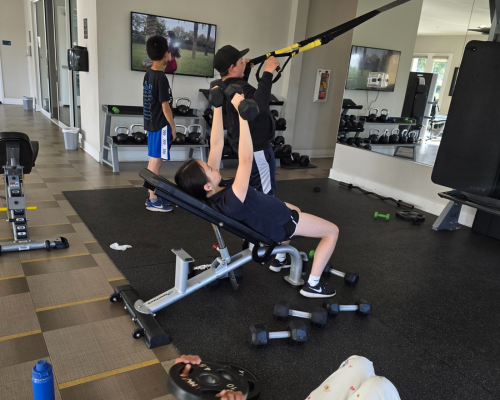
Strength training supports motor planning by creating a stable learning environment for movement.
Key mechanisms include:
🔹 Consistent resistance input
🔹 Stable body positions
🔹 Reduced movement speed
🔹 High repetition with low distraction
Over time, this helps autistic kids build more accurate internal “maps” of how their bodies move through space.
→ Effects of physical activity intervention on motor proficiency and physical fitness in children with ASD. Autism, 2010
Clinical takeaway: Structured physical activity significantly improves motor coordination, movement sequencing, and physical competence in autistic children.
When movement feels unpredictable, anxiety rises. When movement becomes predictable, confidence follows.
Strength training for motor planning in autism supports regulation by:
✅ Reducing movement-related anxiety
✅ Improving task confidence
✅ Lowering frustration during physical activity
✅ Creating successful repetition loops
→ A systematic review of the behavioural outcomes following exercise interventions for children and youth with autism spectrum disorder. Journal of Autism and Developmental Disorders, 2016
Clinical takeaway: Structured, repetitive physical training improves both motor control and emotional regulation in autistic youth.
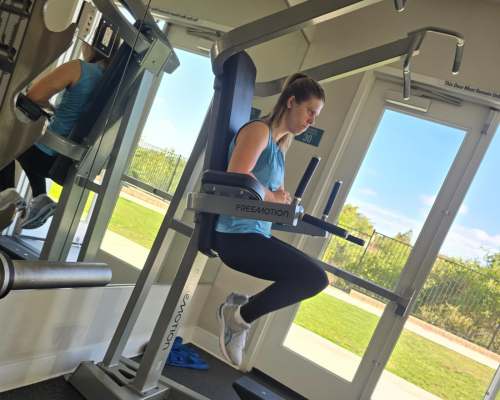
Motor planning improves fastest in low-distraction environments.
Our programs are delivered through:
✅ One-on-one training
✅ Small groups of 2–3 kids maximum
This allows for:
🔹 Individual pacing
🔹 Focused repetition
🔹 Reduced sensory load
🔹 Real coaching feedback
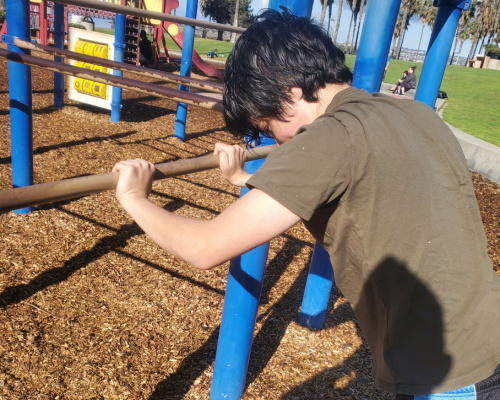
Wired Fitness San Diego blends STS structure with minimal, appropriate social exposure.
In practice:
🔹 Sessions follow a predictable routine
🔹 Coaching language stays calm and consistent
🔹 Peer interaction is optional
🔹 Skill mastery comes before social complexity
This protects regulation while still supporting long-term independence.
Many families are unaware that San Diego Regional Center (SDRC) may support structured fitness services when they align with adaptive skill development and functional movement goals.
At Wired Fitness San Diego:
✅ Programs are structured and goal-oriented
✅ Training may align with adaptive and motor skill objectives
✅ Families can explore SDRC options with their service coordinator
We regularly help families navigate these conversations.
Strength training for motor planning in autism is a foundational component of broader autism fitness programming.
To see how this integrates into full programs, visit:
🔗 Autism Fitness in San Diego
Our strength training for motor planning in autism helps kids build coordination, confidence, and control—without overwhelm.
strength training for motor planning in autism, motor planning autism exercise, autism motor planning training, strength training motor coordination autism, neurodiverse motor skills training
Theme: Illdy. © Copyright 2016. All Rights Reserved.